


All example pricing in this guide is shown in USD unless otherwise stated. Platform pricing varies by market, and we reference UK figures where relevant.
What Does Ecommerce Automation Cost?
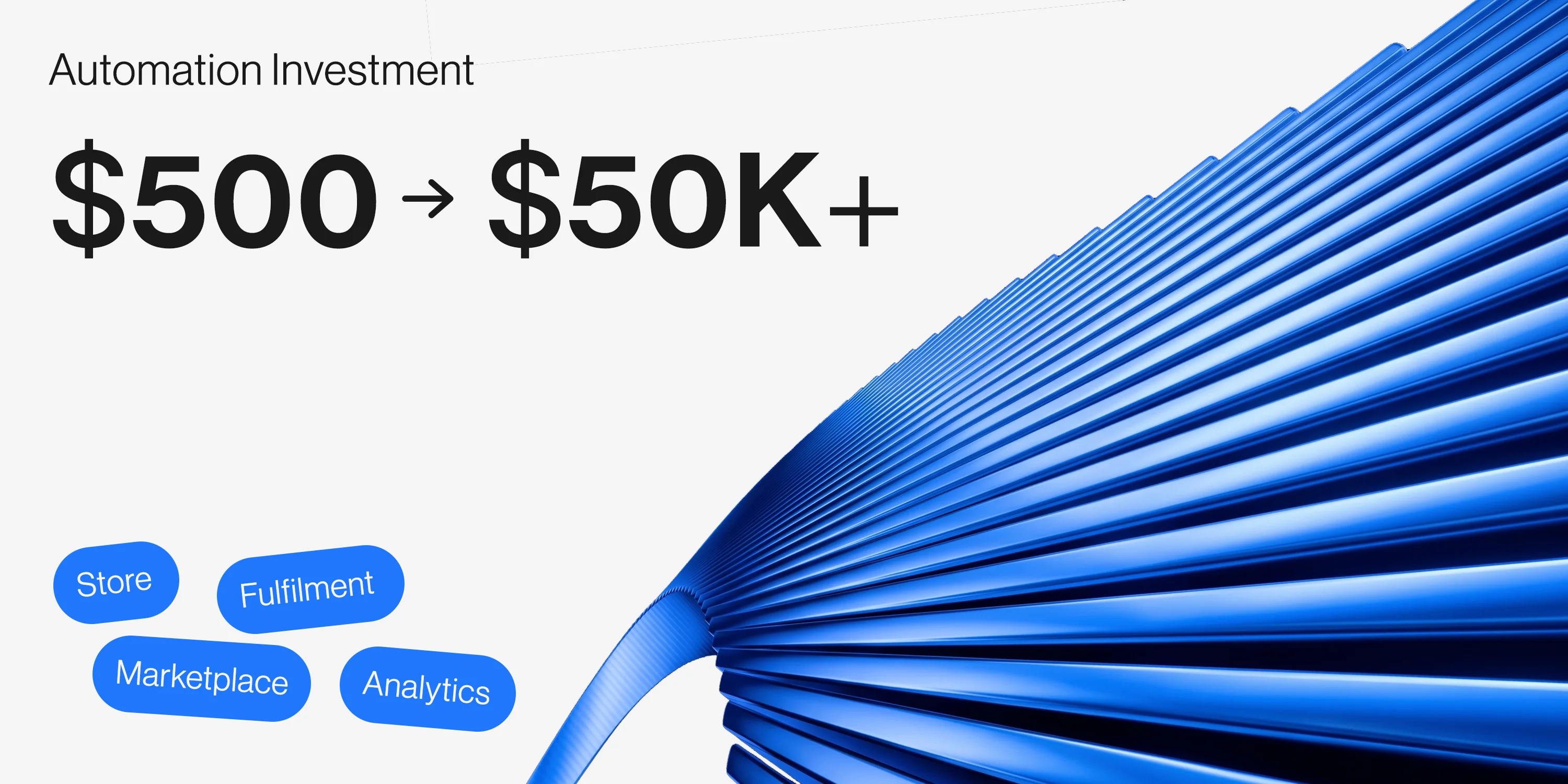
There is no single price for ecommerce automation. A small Shopify store automating order notifications might spend a few hundred dollars on setup. A growing multichannel retailer connecting Shopify, Amazon, inventory, fulfilment, CRM, customer support and reporting might invest tens of thousands.
As a planning guide, most projects fall into one of four bands:
These are illustrative planning ranges, not an established market average; a project can land above or below them depending on the number of systems involved, the volume of data moving between them, and how much custom development is required.
Software subscriptions sit on top of this. Zapier's Professional plan currently starts at $19.99 per month, with Team from $69 per month; the Free plan includes 100 tasks. Shopify's current US annual pricing is $29 for Basic, $79 for Grow and $299 for Advanced. Shopify Plus starts at $2,300 per month on a three-year term, or $2,500 per month on a one-year term. In the UK, Shopify's annual plans currently run $19, $49 and $259, with Plus starting from $1,800 per month.
But the software line item is rarely the number that matters most. The real budgeting question is not "what does the tool cost?" it's "what does it cost to design, connect, govern and maintain the workflow reliably?"
Automation Cost vs Total Cost of Ownership
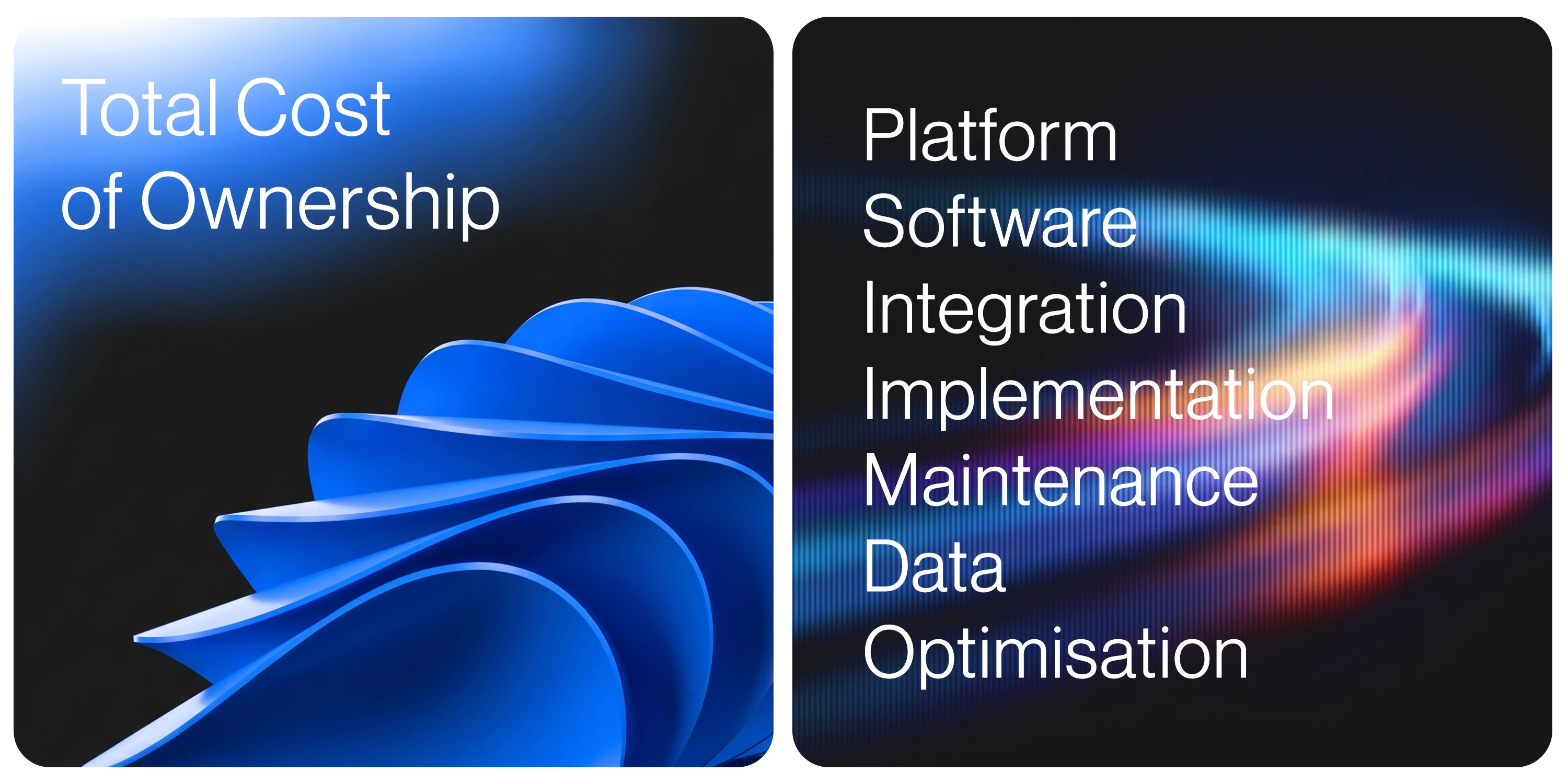
We look at ecommerce automation as an investment in the operating model, not a line item for a piece of software. The full cost of ownership usually spans seven areas:
- Ecommerce platform fees
- Automation software subscriptions
- Integration or custom development
- Implementation (discovery, mapping, build, testing)
- Ongoing maintenance and monitoring
- Data and analytics
- Continuous optimisation
Treating automation as a software purchase alone almost always understates the real investment and understates the value it can return.
What Actually Determines the Investment?
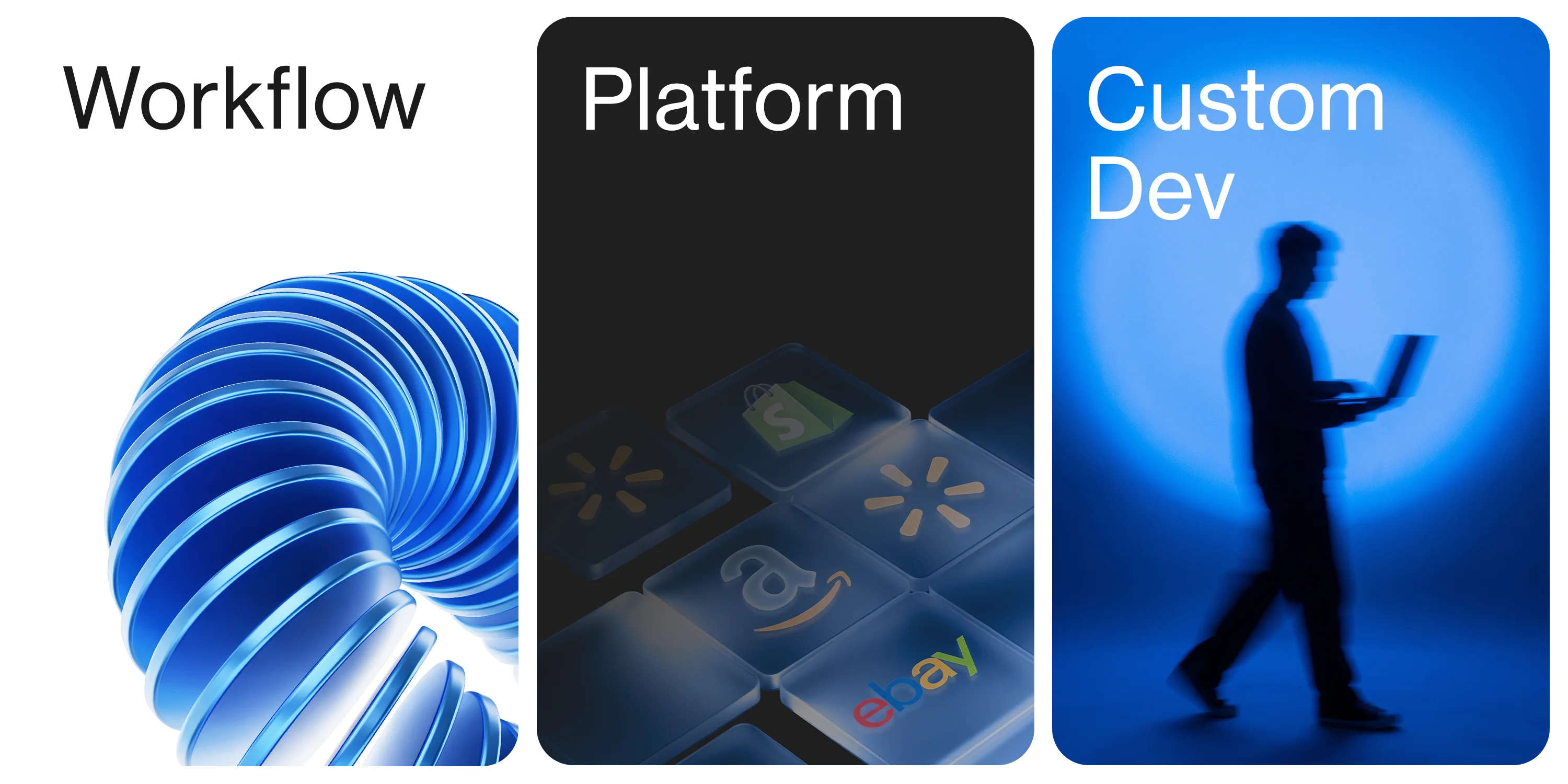
Three factors do most of the work in shaping the final number.
Number of workflows. A business might want to automate order processing, customer emails, inventory updates, low-stock alerts, order confirmations, returns, support tickets, lead management, review requests, sales reporting, marketing notifications and marketplace synchronisation. Automating one or two of these is inexpensive. Automating a dozen connected processes requires considerably more planning, testing and governance.
Number of platforms. A single-platform Shopify business is relatively straightforward to automate. A business selling across Shopify, Amazon, eBay and Walmart, while running an ERP, CRM, warehouse platform and accounting software, is a different scale of project. Consider a single order: it starts on the ecommerce platform, updates inventory, reaches the warehouse, is handed to the shipping provider, triggers a customer notification, and flows into accounting and reporting. Every additional connection in that chain is another point that needs configuration, testing and ongoing monitoring.
Custom development requirements. Many workflows can run on no-code or low-code tools. Others need custom APIs, scripts or middleware usually because the standard integration can't reliably handle an edge case or a legacy system. We would only recommend custom build once we've confirmed a standard integration genuinely can't do the job; it's the more expensive option and should be a deliberate choice, not a default.
What Businesses Are Actually Paying For
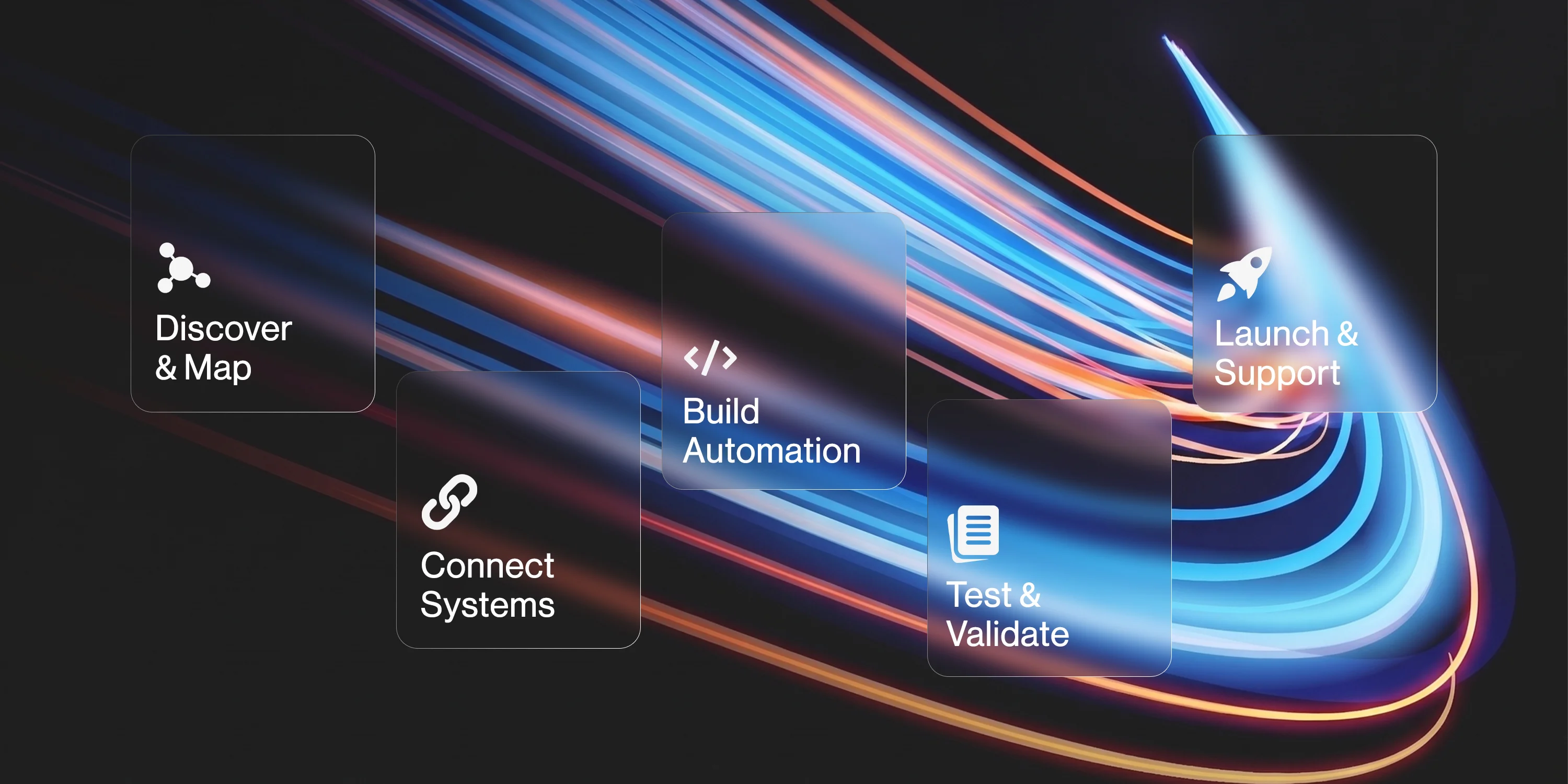
A one-time setup project typically covers: business process discovery, workflow mapping, platform analysis, integration planning, API configuration, automation development, data mapping, testing, error handling, staff training, documentation and launch support. For a single basic workflow, that might run a few hundred dollars; for a fuller ecommerce operation, it can reach several thousand, and custom API work or legacy systems can push it higher still.
The question worth asking a provider isn't "what's the setup fee?" It's: what business process is being automated, what systems are being connected, and what measurable problem will the automation solve?
Where a business needs ongoing support rather than a one-off build, a monthly service typically covers workflow monitoring, error resolution, maintenance, platform updates, new workflow creation, performance reviews, reporting, integration management, data quality checks and process optimisation. Smaller businesses tend to sit around $100–$750/month, growing businesses with several integrations around $500–$2,000/month, and larger multi-marketplace operations from $2,000 up to $10,000+/month.
Where Automation Creates Commercial Value
.webp)
Labour savings are the easiest number to calculate, but they're rarely the biggest source of value. Suppose a business spends 20 hours a week on repetitive administrative work, and automation cuts that by 60% roughly 12 hours a week, or 600 hours a year. At an internal cost of $25/hour, that's a theoretical labour value of around $15,000 a year. Real results will vary with salaries, processes, order volume and how the recovered time gets used but the exercise is worth running.
The larger opportunity usually sits elsewhere: fewer costly errors, faster fulfilment, better customer experience, and critically scalability. If order volume doubles, a manual process typically needs proportionally more headcount. A well-built automated workflow often absorbs significantly more volume without the same increase in administrative load. That's the difference between automation that saves time this quarter and automation that changes what the business can handle next year.
What Should You Automate First?
Rather than automating everything at once, we score candidate workflows against a small set of factors and prioritise the ones with high commercial impact, high repetition and low ambiguity:
In practice, that usually points first to order management (moving order data between systems, triggering fulfilment, reducing manual entry), inventory management (updating stock levels across channels and triggering low-stock alerts to reduce overselling), customer communication (order, shipping and delivery updates, review requests with human involvement kept wherever empathy or judgement is needed), and reporting (pulling figures from multiple platforms into one dashboard instead of manual collection every morning).
The Hidden Cost of Poor Automation
.webp)
Automation should reduce operational risk, not simply reduce manual effort and a badly designed workflow can be more expensive than the manual process it replaced. A cheap automation that quietly syncs incorrect inventory across Amazon, Shopify and the warehouse can generate far more cost in overselling, refunds and support time than it ever saved in labour.
Before greenlighting a build, enterprise buyers in particular should be thinking about data integrity, authentication and permissions, API rate limits, failed-workflow handling, duplicate records, monitoring and audit trails, workflow ownership, data governance, vendor dependency and business continuity, and what happens when the automation fails silently rather than loudly. These aren't edge-case concerns; they're the difference between automation that scales safely and automation that creates a new category of operational risk.
How to Calculate Automation ROI

We use several measures together rather than relying on one number.
Labour savings hours spent on a process before automation versus after. Error reduction: the cost of incorrect orders, stock discrepancies or reporting errors that automation removes. Revenue opportunity automated follow-ups, abandoned-cart workflows and personalised journeys that recover otherwise lost sales. Scalability whether the business can handle double the order volume without a proportional increase in headcount.
Beyond labour hours, it's worth tracking cost per order, processing time, manual touches per order, order exception rate, inventory accuracy, overselling incidence, support response time, reporting latency, fulfilment SLA adherence and capacity per employee. Together, these give a much fuller picture of commercial value than "hours saved" alone.
Building a Connected Commerce Operation
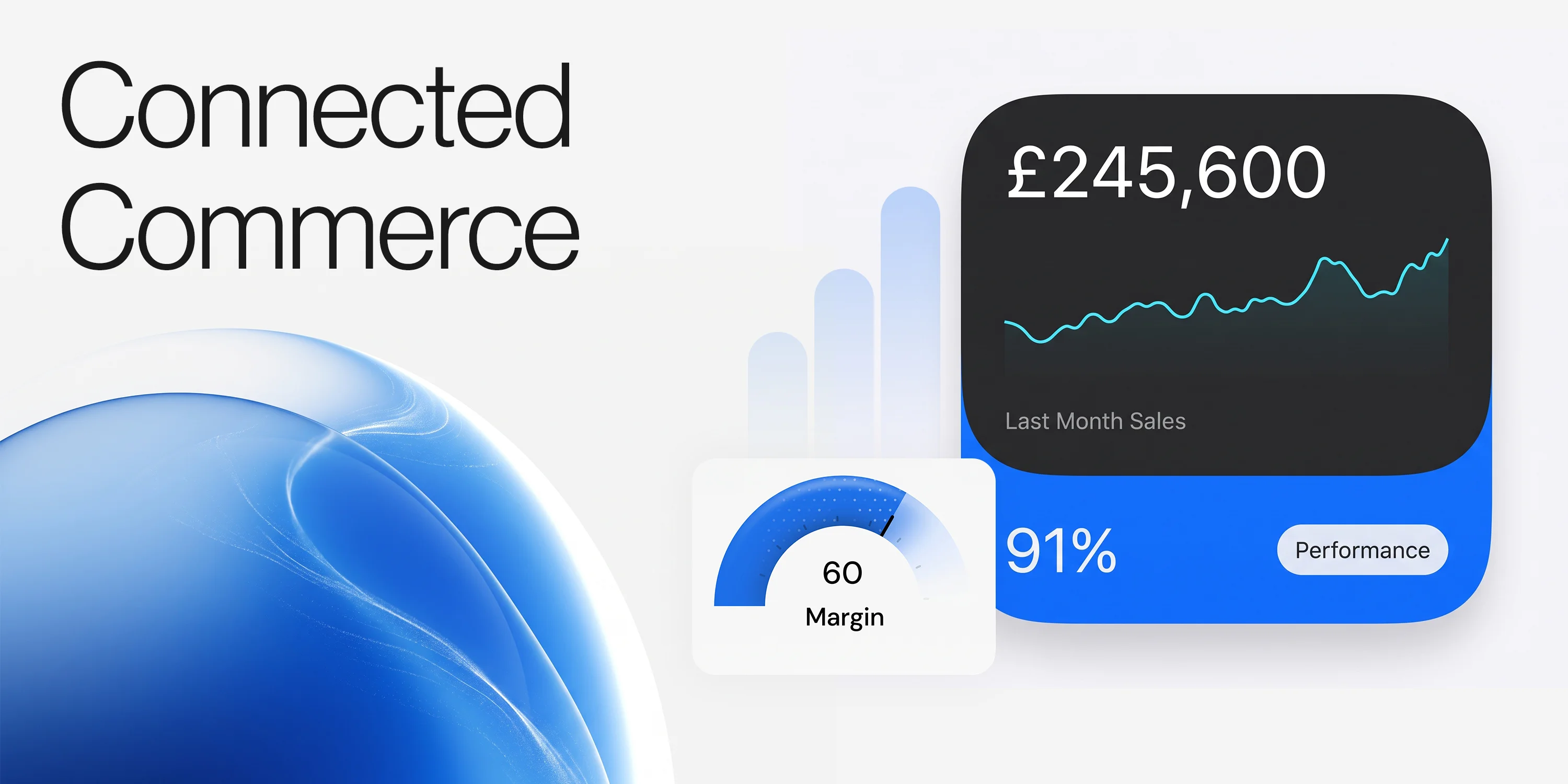
The systems involved are rarely just "things that need connecting" ; they're links in a single commercial picture. Amazon sales data can feed forecasting, not just inventory. Shopify orders can affect available-to-promise stock. 3PL fulfilment events can trigger customer communication automatically. Returns can update both inventory and financial reporting in the same step. Marketplace advertising data can feed profitability reporting rather than sitting in its own silo. Done well, the result is a consolidated channel, margin and operational view for leadership not just a set of automated tasks.
How We Approach Automation
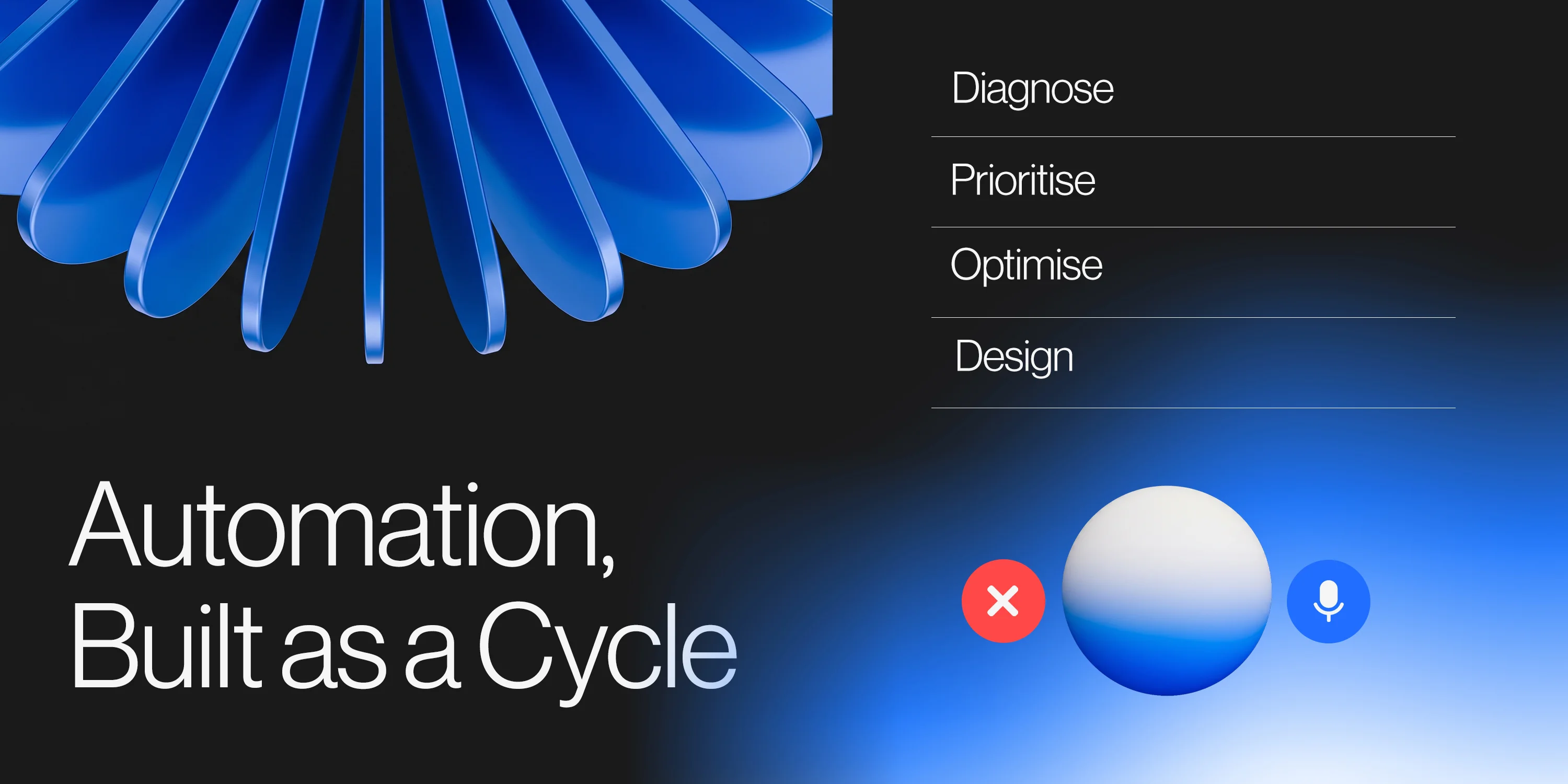
We see automation as part of a wider commerce operating model, not an isolated technology project. Our approach follows six stages:
- Diagnose the current operating model where time is being lost, where information is duplicated, where manual handovers create delays.
- Prioritise automation opportunities based on commercial impact, not novelty.
- Design the target workflow and data architecture, including a clear source of truth for each data point.
- Connect marketplaces, commerce platforms and operational systems.
- Govern data quality, exceptions, security and the human intervention points that remain.
- Optimise continuously against measurable operational and commercial outcomes.
This only works because the underlying process is understood first. We start with where friction is actually occurring and what it costs commercially, then prioritise the workflows with the strongest return rather than starting from the technology.
What a Good Automation Proposal Should Include
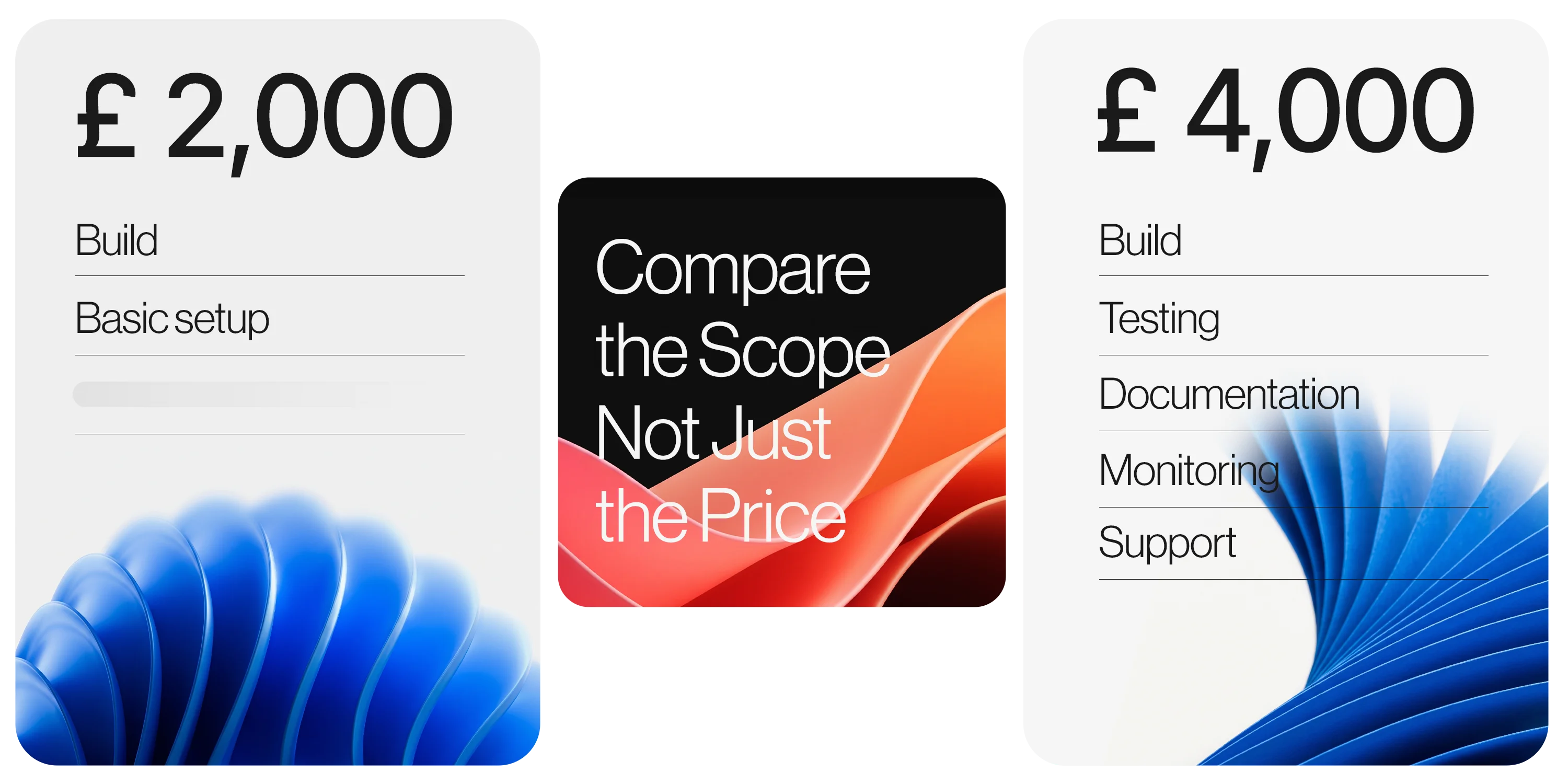
Before agreeing to a project, ask the provider for a detailed scope covering: number of workflows, platforms being connected, development work, software subscriptions, API or integration fees, data migration, testing, training, documentation, launch support, maintenance, monthly management and future development costs.
This makes it far easier to compare providers fairly. A $2,000 quote from one provider isn't necessarily cheaper than a $4,000 quote from another, if the second includes testing, documentation, monitoring and support that the first leaves out.
Final Decision Framework
The right question isn't "what's the cheapest way to automate this?" It's "how much commercial value does this create relative to its total cost of ownership?" A $5,000 project that saves thousands of hours over several years, reduces costly errors, and lets a team process substantially more orders can be worth far more than its price tag suggests. The strongest automation strategy isn't the one with the most workflows, it's the one that removes the right manual work, connects the right systems, and creates value leadership can actually measure.
Ready to Build a Commercial Automation Roadmap?
Before investing in another automation platform, it's worth understanding which processes are actually costing your business time, margin and scalability. We help commerce businesses assess their operating model, identify high-value automation opportunities, and build a roadmap around measurable commercial outcomes.
FAQs About Ecommerce Automation Costs
1. How much do ecommerce automation services cost?
It depends on the number of workflows, platforms, integrations and level of custom development required. Basic projects tend to run $500–$2,000, larger projects $5,000–$15,000 or more, and enterprise-level projects can exceed $50,000 where complex integrations are involved.
2. What is included in ecommerce automation services?
Typically: workflow planning, platform integrations, API connections, order automation, inventory updates, customer communication, reporting, data synchronisation, testing and ongoing maintenance the exact mix depends on the business's requirements and goals.
3. How much does ecommerce automation software cost per month?
It varies by platform and usage. Zapier's paid plans currently start at $19.99/month for Professional. Other platforms price by users, features, transactions or automation volume it's worth calculating expected monthly usage before selecting a plan, since task volume can push costs well above the entry-level price.
4. Can ecommerce automation reduce operating costs?
Yes. It can reduce time spent on repetitive tasks such as order processing, inventory updates, reporting and customer notifications, reduce manual errors, and let teams handle higher order volumes without a proportional increase in administrative work.
5. Is ecommerce automation worth it for a small business?
Yes, provided it targets a genuine business problem. Start with repetitive, high-volume tasks that consume significant staff time a small business doesn't need dozens of automated workflows. A few high-impact processes can deliver measurable savings while keeping the initial investment manageable.